
High blood pressure, or hypertension, is often called a “silent” condition because many people may have no noticeable symptoms even when their blood pressure is consistently elevated. Over time, uncontrolled hypertension can affect important organs, including the heart, kidneys, brain, eyes, and blood vessels.
A blood pressure reading is the starting point, but your doctor may recommend additional blood and diagnostic tests depending on your readings, age, medical history, symptoms, and other risk factors. These tests can help identify cardiovascular risk, check whether organs are being affected, and look for conditions that may be contributing to high blood pressure.
Why Are Tests Important for High Blood Pressure?
High blood pressure can place continuous strain on blood vessels and the heart. It can also be associated with kidney disease, diabetes, abnormal cholesterol levels, and other cardiovascular risk factors.
A medical evaluation may therefore include:
- Blood tests
- Urine tests
- Electrocardiogram (ECG)
- Echocardiogram in selected patients
- Kidney function assessment
- Blood glucose and cholesterol testing
- Additional imaging or specialized tests when clinically indicated
Not everyone with hypertension requires all of these tests. Your doctor decides which investigations are appropriate based on your individual health profile.
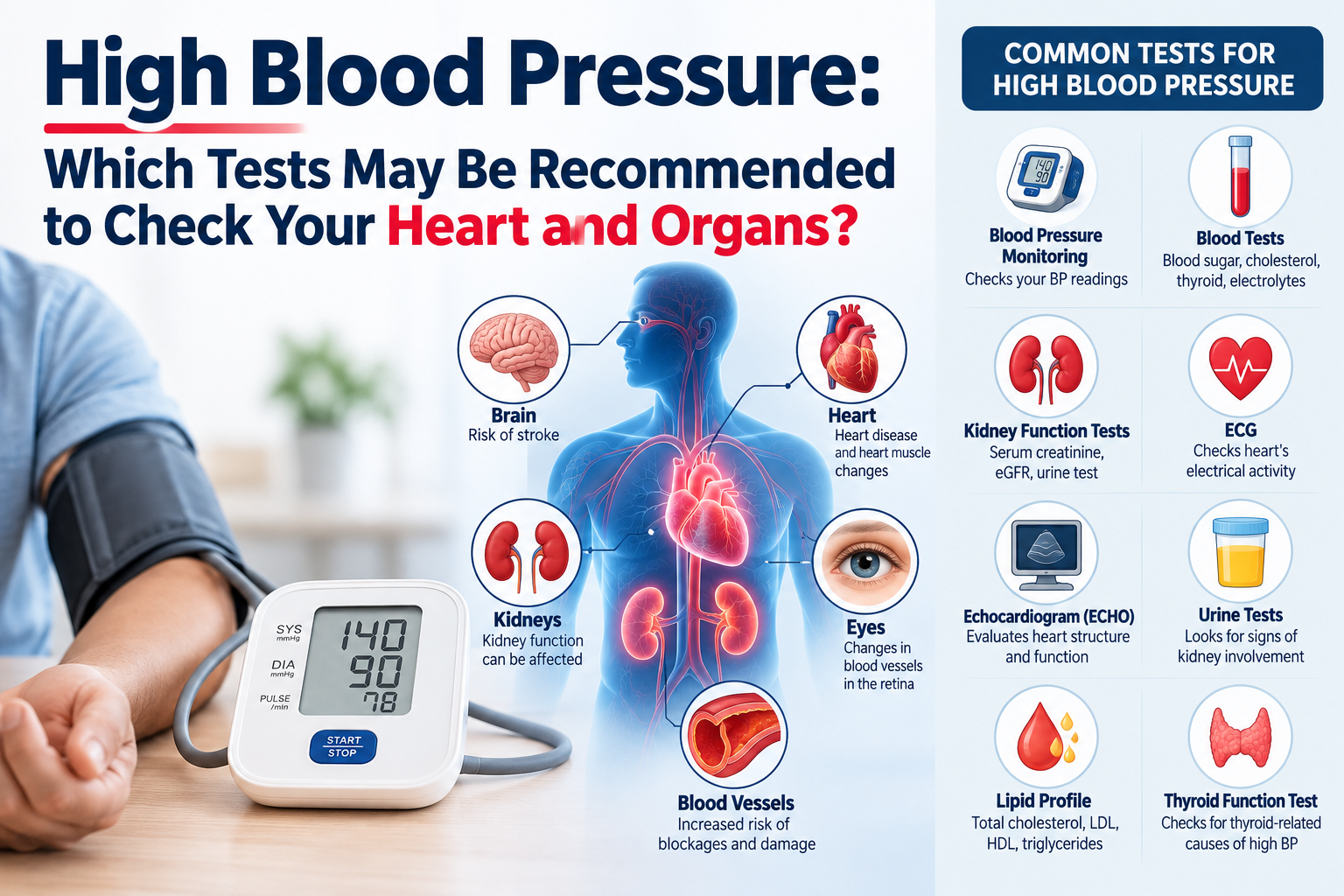
1. Blood Pressure Measurement
Accurate blood pressure measurement is the first and most important step.
A healthcare professional may take more than one reading because blood pressure naturally changes throughout the day. Home blood pressure monitoring or ambulatory blood pressure monitoring (ABPM) may also be recommended in some situations to provide a better picture of your usual blood pressure and help identify patterns such as white-coat or masked hypertension.
Keeping a record of home readings can also help your doctor assess how well your blood pressure is being controlled.
2. Kidney Function Tests
The kidneys play an important role in regulating blood pressure. At the same time, long-term high blood pressure can damage the kidneys.
Your doctor may therefore recommend tests such as:
- Serum creatinine
- Estimated glomerular filtration rate (eGFR)
- Urinalysis
- Urine albumin-to-creatinine ratio (ACR) when appropriate
These tests can help assess kidney function and identify signs of kidney involvement. Kidney function testing is included among the laboratory evaluations used in the assessment of hypertension.
3. Blood Sugar Tests
High blood pressure and abnormal blood sugar frequently occur together and can increase cardiovascular and kidney-related risks.
Depending on your circumstances, your doctor may recommend:
- Fasting blood glucose
- HbA1c
These tests help identify diabetes or prediabetes and provide additional information about your overall cardiovascular risk.
4. Cholesterol and Lipid Profile
High cholesterol can contribute to the buildup of fatty deposits inside arteries. When it occurs alongside high blood pressure, overall cardiovascular risk may be higher.
A lipid profile may measure:
- Total cholesterol
- LDL cholesterol
- HDL cholesterol
- Triglycerides
A lipid profile is part of the laboratory assessment commonly considered when evaluating adults with hypertension.
5. Electrocardiogram (ECG)
An ECG records the electrical activity of the heart.
Doctors may recommend an ECG as part of the evaluation of hypertension, particularly when there are concerns about cardiovascular disease or symptoms such as:
- Chest discomfort
- Palpitations
- Shortness of breath
- Irregular heartbeat
An ECG can provide information about the heart’s rhythm and electrical activity and may also show patterns that warrant further evaluation.
6. Echocardiogram
An echocardiogram (ECHO) uses ultrasound to create images of the heart.
It is not required for everyone with high blood pressure, but your doctor may recommend it when there is a reason to evaluate the heart’s structure or function.
An ECHO can help assess:
- Heart chamber size
- Heart muscle thickness
- Pumping function
- Heart valve function
- Other structural abnormalities
Echocardiography is considered an optional investigation in hypertension evaluation when clinically appropriate.
7. Electrolyte Tests
Blood tests may also measure electrolytes such as:
- Sodium
- Potassium
- Calcium
These results can provide useful information about kidney function, general metabolic health, and certain medical conditions that may contribute to abnormal blood pressure.
They may also be relevant when doctors are evaluating or monitoring the effects of blood pressure medications.
8. Thyroid Function Testing
Thyroid disorders can sometimes contribute to changes in blood pressure.
A thyroid-stimulating hormone (TSH) test may therefore be included in the evaluation when clinically appropriate. It is among the laboratory tests listed in hypertension evaluation guidance.
Additional thyroid tests may be ordered depending on the patient’s symptoms and initial results.
9. Tests for Possible Secondary Causes of Hypertension
Most hypertension is classified as primary hypertension, but in some people, high blood pressure may be related to another underlying condition.
Doctors may investigate secondary causes when the clinical history or blood pressure pattern suggests it.
Depending on the suspected cause, further evaluation could involve tests of the:
- Kidneys
- Hormonal system
- Renal arteries
- Heart and blood vessels
- Sleep and breathing patterns
These investigations are not routine for everyone with hypertension. They are generally selected based on individual findings and medical history.
Which Organs Can High Blood Pressure Affect?
Uncontrolled hypertension can gradually affect several parts of the body.
Heart
Long-term high blood pressure can increase the workload of the heart and contribute to cardiovascular disease.
Kidneys
The small blood vessels in the kidneys can be damaged by persistent high blood pressure, potentially affecting kidney function.
Brain
Hypertension is an important risk factor for stroke and other cerebrovascular problems.
Eyes
High blood pressure can damage small blood vessels in the retina, which may affect vision.
Blood Vessels
Persistently elevated blood pressure can contribute to changes in the arteries and increase cardiovascular risk.
Because hypertension can affect multiple organ systems, evaluating related risk factors and organ function is an important part of comprehensive care.
Does Everyone With High Blood Pressure Need an MRI or CT Scan?
No.
MRI and CT scans are not automatically required simply because someone has hypertension.
Imaging is generally considered when a doctor suspects a specific condition or when symptoms or examination findings warrant further investigation. The appropriate test depends on the suspected problem.
For example, a patient with neurological symptoms may require brain imaging, while someone with certain cardiovascular or kidney concerns may require different investigations.
When Should You Get Your Blood Pressure Checked?
You should have your blood pressure checked regularly, particularly if you:
- Have a family history of hypertension
- Are overweight
- Have diabetes
- Have high cholesterol
- Smoke
- Have kidney disease
- Have a history of heart disease
- Have previously recorded elevated blood pressure
The frequency of monitoring depends on your blood pressure readings and overall health.
What Can You Do to Protect Your Heart and Kidneys?
Testing is only one part of managing high blood pressure. Your doctor may also recommend lifestyle measures such as:
- Reducing excess dietary sodium
- Eating a balanced diet rich in vegetables and fruits
- Maintaining a healthy weight
- Staying physically active
- Limiting alcohol
- Avoiding tobacco
- Taking prescribed medications consistently
- Monitoring blood pressure at home when advised
- Attending regular medical follow-ups
Current hypertension guidance emphasizes accurate blood pressure measurement, home monitoring when appropriate, lifestyle measures, and timely treatment based on individual cardiovascular risk.
When Should You Seek Urgent Medical Attention?
Extremely high blood pressure accompanied by concerning symptoms requires urgent medical assessment.
Seek emergency care if you experience symptoms such as:
- Severe chest pain
- Severe difficulty breathing
- Sudden weakness or numbness
- Difficulty speaking
- Sudden vision changes
- Severe headache with neurological symptoms
- Confusion or loss of consciousness
Do not rely on symptoms alone to determine whether your blood pressure is high—hypertension can exist without noticeable warning signs.
Final Thoughts
High blood pressure is more than just a number on a blood pressure monitor. Because persistent hypertension can affect the heart, kidneys, brain, blood vessels, and other organs, doctors may recommend a combination of blood tests, urine tests, ECG, kidney function assessment, and other investigations depending on the individual patient.
There is no single set of tests that is appropriate for everyone. If you have repeatedly elevated blood pressure, speak with your healthcare provider about which tests are appropriate for you. Early detection and appropriate management can help reduce the risk of long-term complications.
For diagnostic testing, always follow the preparation and test instructions provided by your healthcare professional or diagnostic centre.
Frequently Asked Questions
Can high blood pressure damage the kidneys?
Yes. Persistent high blood pressure can affect the blood vessels within the kidneys and may contribute to declining kidney function. Kidney function and urine tests can help doctors look for evidence of kidney involvement.
Is ECG necessary for every person with hypertension?
Not necessarily. An ECG may be included in the evaluation of hypertension, but whether it is appropriate depends on the patient’s medical history, symptoms, risk factors, and doctor’s assessment.
Can a blood test detect high blood pressure?
No. High blood pressure itself is measured with a blood pressure monitor. Blood tests are used to evaluate related conditions and risk factors, such as kidney function, blood sugar, cholesterol, and electrolytes.
Should I get an MRI if I have high blood pressure?
Not simply because you have hypertension. MRI is generally ordered when there is a specific clinical reason or suspected condition that requires detailed imaging.
How often should I check my blood pressure?
The appropriate frequency depends on your current readings and overall health. People with elevated or diagnosed high blood pressure may need more frequent monitoring than people with consistently normal readings.