
A full health checkup is an important step toward understanding your overall health and identifying potential medical concerns early. Whether you are scheduling your first preventive screening or attending a routine annual checkup, preparing properly can help ensure that your tests are performed accurately and your visit goes smoothly.
Many people are unsure whether they need to fast, which medications they should take, or what documents they should bring to a diagnostic centre. The preparation required depends on the tests included in your health checkup, so following the instructions provided by your healthcare professional is essential.
In this guide, we explain how to prepare for a full health checkup, what to bring, which precautions to follow, and what to do after receiving your reports.
Why Is Preparation Important Before a Health Checkup?
Proper preparation helps reduce avoidable testing errors and makes the diagnostic process more efficient.
For example, eating before a test that requires fasting may affect blood glucose and triglyceride measurements. Similarly, strenuous exercise, dehydration, certain medications, and supplements can influence some test results.
Preparing in advance can help you:
- Follow the correct fasting instructions.
- Avoid delays at the diagnostic centre.
- Provide accurate information about your medical history.
- Ensure that prescribed medications are handled appropriately.
- Understand the purpose of your tests.
- Make it easier for your doctor to interpret your results.
Remember that not every test requires special preparation. Always confirm the requirements for your specific health checkup package.
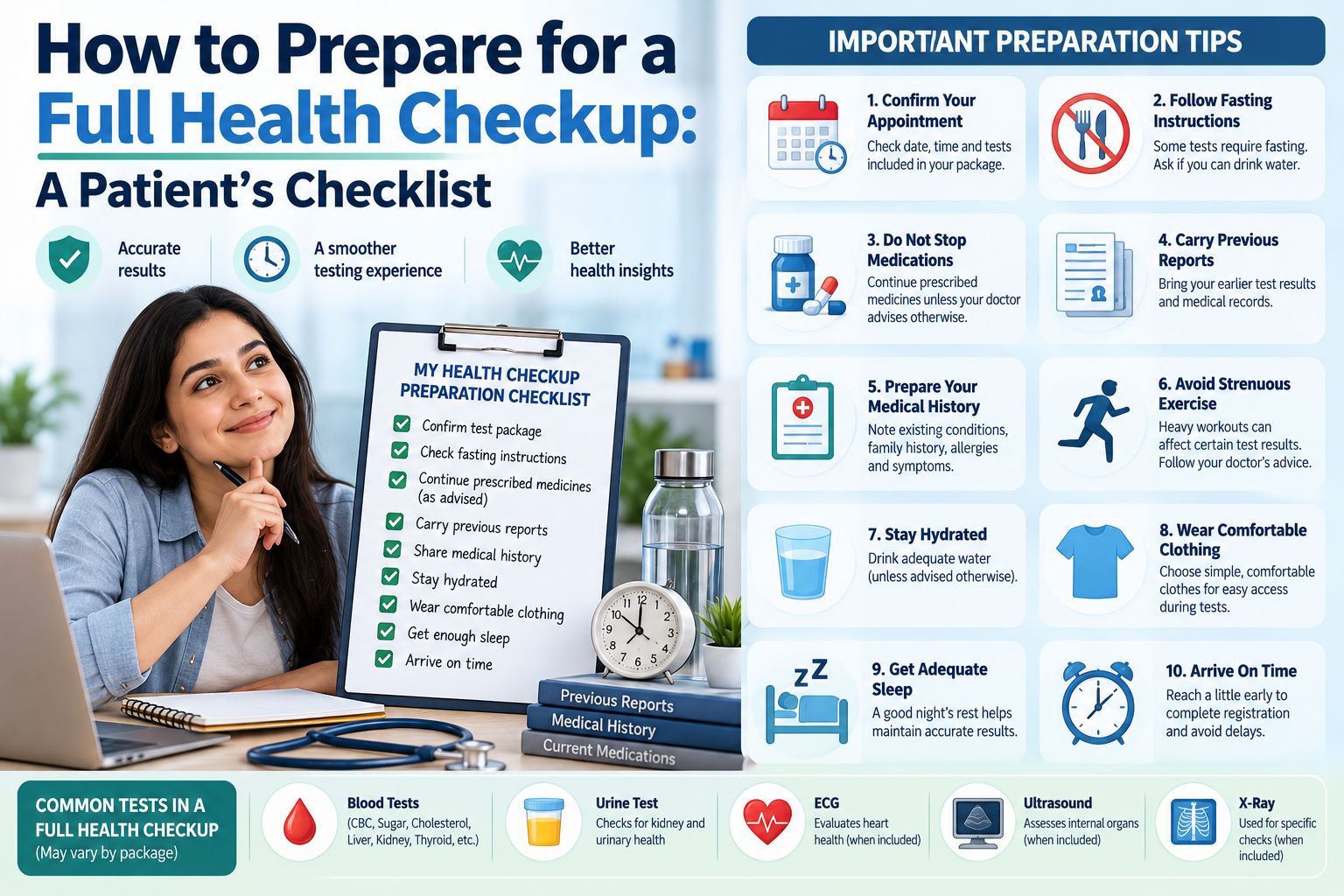
Patient’s Checklist: Before Your Health Checkup
Use this checklist to prepare for your appointment.
1. Confirm Your Appointment and Test Package
Before visiting the diagnostic centre, confirm your appointment date, reporting time, and the tests included in your package.
Ask the diagnostic centre whether you need to:
- Fast before blood collection.
- Drink water as usual or follow specific fluid instructions.
- Provide a urine or stool sample.
- Arrive at a particular time for a scheduled procedure.
- Bring previous reports or a doctor’s prescription.
If your package includes imaging tests or specialized investigations, ask whether any additional preparation is required.
2. Check Whether Fasting Is Required
Some blood tests require fasting, while others do not.
Fasting may be requested for certain tests, such as fasting blood glucose and some lipid measurements. When fasting is required, the laboratory will usually specify the duration and whether plain water is permitted.
Follow these precautions:
- Confirm the fasting duration with the diagnostic centre.
- Avoid food and caloric beverages during the instructed fasting period.
- Drink plain water if permitted.
- Avoid chewing gum or smoking during the fasting period if instructed.
- Do not extend fasting longer than necessary.
Do not assume that every full health checkup requires fasting. Requirements depend on the tests ordered and the laboratory’s instructions.
If you accidentally eat or drink something that may affect a test, inform the staff before sample collection. They can advise whether the test can proceed or should be rescheduled.
3. Do Not Stop Prescribed Medications Without Advice
Many patients take medications for conditions such as diabetes, high blood pressure, thyroid disorders, or heart disease.
Some medicines may need special consideration before fasting blood tests or certain procedures. However, stopping prescribed medication without medical advice can be harmful.
Before your appointment:
- Make a list of your current medications.
- Include prescription medicines, over-the-counter products, and supplements.
- Ask your healthcare professional whether any changes are necessary.
- Follow specific instructions for diabetes medications or insulin if fasting is required.
If you take regular medication, do not skip a dose simply because you are attending a health checkup.
4. Carry Previous Medical Reports
Previous test results can help your doctor compare changes over time.
Bring relevant documents, such as:
- Previous blood test reports.
- Blood pressure records.
- Blood sugar or HbA1c results.
- Kidney and liver function reports.
- Previous imaging reports, where relevant.
- Details of existing medical conditions.
- Information about allergies and previous surgeries.
These records are especially useful if you are monitoring a chronic condition or following up on an earlier abnormal result.
5. Prepare Your Medical and Family History
Your medical history helps your healthcare professional determine which screenings are appropriate.
Before your appointment, make a note of:
- Existing medical conditions.
- Previous surgeries or hospital admissions.
- Allergies to medications or contrast agents.
- Family history of diabetes, heart disease, hypertension, or certain cancers.
- Smoking, alcohol use, and other relevant lifestyle factors.
- Symptoms you have recently experienced.
Be honest about your health history. This information helps your doctor interpret results and decide whether further investigations are necessary.
6. Avoid Unusual Exercise Before Testing
Intense exercise shortly before certain tests can temporarily affect measurements such as creatine kinase, glucose, and some other blood markers.
If your health checkup includes blood tests, consider avoiding unusually strenuous workouts before your appointment and follow any instructions from the laboratory.
You do not need to stop your normal physical activity for an extended period unless your healthcare professional advises you to do so.
7. Stay Hydrated
Drinking adequate water is generally helpful before many routine blood tests because dehydration can make blood collection more difficult.
If fasting is required, plain water is often allowed, but you should confirm this with the diagnostic centre.
Some procedures, such as particular ultrasound examinations, may require specific fluid or bladder instructions. Follow those instructions instead of applying general hydration advice to every test.
8. Wear Comfortable Clothing
Choose clothing that makes it easy for healthcare staff to access your arm for blood collection or your chest for an ECG.
If your appointment includes imaging, wear comfortable clothing and avoid jewellery or accessories that may need to be removed.
For certain scans, you may be asked to change into a hospital gown.
9. Get Adequate Sleep
Try to maintain your normal sleep schedule before the appointment.
Poor sleep can affect some measurements, including blood pressure and glucose regulation. A normal night’s rest also helps you feel more comfortable during your visit.
Avoid excessive caffeine or other stimulants if they are not part of your usual routine, particularly before a blood pressure measurement.
10. Arrive on Time
Arriving on time gives you enough opportunity to complete registration, confirm your tests, and clarify any preparation concerns.
Consider arriving a little early if your appointment includes multiple investigations.
If you feel dizzy or unwell after fasting, inform the staff immediately rather than trying to complete the tests without assistance.
What Tests May Be Included in a Full Health Checkup?
The tests included in a health checkup vary according to the package, age, medical history, and individual risk factors.
Common investigations may include:
| Test | What It Helps Assess |
|---|---|
| Complete blood count (CBC) | Blood cells and possible signs of anemia |
| Blood glucose or HbA1c | Blood sugar levels and diabetes risk |
| Lipid profile | Cholesterol and triglycerides |
| Kidney function tests | Kidney function and filtration |
| Liver function tests | Markers associated with liver health |
| Thyroid function test | Thyroid function when indicated |
| Urine examination | Selected urinary and kidney-related abnormalities |
| Blood pressure measurement | Elevated blood pressure |
| ECG | Electrical activity of the heart when appropriate |
| Other investigations | Selected according to individual health needs |
Not everyone needs every test listed above. A healthcare professional can help determine which investigations are suitable for your circumstances.
Special Preparation for Imaging Tests
If your health checkup includes imaging, preparation may differ depending on the procedure.
Ultrasound
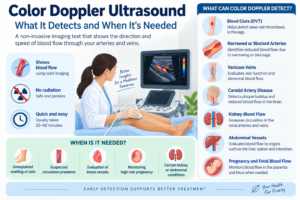
Some abdominal ultrasound examinations require fasting for a specified period. Pelvic ultrasound examinations may require a full bladder, depending on the technique used.
Confirm the exact instructions before your appointment.
X-Ray
Most routine X-rays require little or no preparation. You may need to remove metal objects or jewellery from the area being examined.
Tell the healthcare team if you are pregnant or may be pregnant before undergoing an imaging procedure involving radiation.
CT Scan
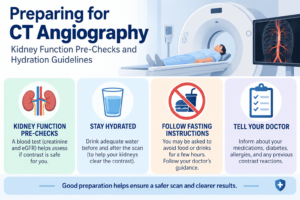
Some CT scans require no special preparation, while others may involve fasting, blood tests, or precautions related to contrast material.
Inform the radiology team about relevant allergies, kidney problems, medications, and previous reactions to contrast agents.
MRI
MRI preparation depends on the examination. You may need to remove metal objects and complete a safety questionnaire about implants, medical devices, or previous surgeries.
Always disclose any implanted device or metallic fragment before entering the MRI room.
What Should You Do After Your Health Checkup?
Completing your tests is only the first step. Understanding the results and following up appropriately are equally important.
After your appointment:
- Confirm when your reports will be available.
- Keep copies of your results for future reference.
- Review abnormal findings with a qualified healthcare professional.
- Ask whether any repeat testing or additional investigations are needed.
- Follow your doctor’s recommendations regarding diet, physical activity, medication, or further evaluation.
Avoid diagnosing yourself based on a single abnormal value. Test results must be interpreted in the context of your symptoms, medical history, and the laboratory’s reference ranges.
If you were asked to fast, you can generally return to your normal meals after sample collection unless you have been given other instructions. If you feel lightheaded, sit down and inform the staff.
Common Mistakes to Avoid Before a Health Checkup
Several common mistakes can lead to confusion or unnecessary delays.
- Eating when fasting was specifically required.
- Fasting unnecessarily when it was not required.
- Stopping prescribed medication without medical advice.
- Forgetting to mention supplements or existing medical conditions.
- Failing to inform staff about a possible pregnancy before relevant imaging.
- Not disclosing allergies or implanted medical devices.
- Ignoring previous abnormal test results.
- Assuming every abnormal result means you have a serious disease.
When in doubt, contact your diagnostic centre before the appointment rather than making assumptions.
Frequently Asked Questions
Do I need to fast before a full body checkup?
Not always. Some tests require fasting, while others do not. Confirm the requirements for your specific package, including the permitted fasting duration and whether plain water is allowed.
Can I drink water before a blood test?
Plain water is generally permitted during many fasting blood tests, but you should follow the instructions provided for your particular test.
Should I take my regular medicines before a health checkup?
Do not stop or change prescribed medicines without medical advice. Ask your healthcare professional whether any special instructions apply to your medication or planned tests.
How long does a full health checkup take?
The duration depends on the number and type of investigations included. A package involving several blood tests and imaging procedures may take longer than a basic blood test appointment. Ask the diagnostic centre for an estimated duration.
When should I consult a doctor after receiving my reports?
You should discuss abnormal findings, persistent symptoms, or results that require follow-up with your healthcare professional. If you experience severe symptoms such as chest pain, severe breathing difficulty, or sudden neurological changes, seek emergency medical care rather than waiting for routine report review.
Final Thoughts
Preparing for a full health checkup does not have to be complicated. Confirm your test requirements, follow fasting instructions where necessary, carry your previous medical reports, and inform your healthcare professional about your medications and medical history.
Most importantly, remember that a useful health checkup is not about undergoing the maximum number of tests; it is about choosing the right investigations for your health needs.
At VR Diagnostics, patients can contact the diagnostic team to clarify test preparation requirements before their appointment. Following the correct instructions can help make the testing process smoother and support accurate interpretation of your results.