
Turning 30 is a good time to pay closer attention to your health. Even if you feel healthy, certain conditions, including high blood pressure, diabetes, high cholesterol, and thyroid disorders, can develop without obvious symptoms. Preventive health checkups help identify potential health concerns early and give you an opportunity to make informed decisions about your lifestyle and medical care.
However, not everyone needs the same set of tests. Your age, family history, lifestyle, existing medical conditions, and individual risk factors all influence which screenings may be appropriate.
In this guide, we explain the important health tests adults may consider after age 30, why they matter, and how often they may be needed.
Why Are Preventive Health Checkups Important After 30?
Many health conditions develop gradually. A person may feel energetic and appear healthy while having elevated blood sugar, high blood pressure, or abnormal cholesterol levels.
Preventive screening can help:
- Identify certain health conditions before symptoms appear.
- Assess the risk of heart disease and stroke.
- Detect diabetes and other metabolic disorders.
- Evaluate kidney and liver health when indicated.
- Identify age-appropriate cancer screening needs.
- Establish baseline health measurements for future comparison.
Regular checkups should focus on the tests that are appropriate for your personal health profile rather than automatically including every available investigation.
1. Blood Pressure Measurement
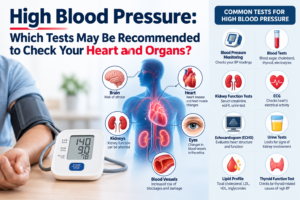
High blood pressure, also known as hypertension, is an important risk factor for heart disease, stroke, and kidney disease. It frequently causes no noticeable symptoms.
A blood pressure measurement is one of the simplest ways to assess cardiovascular health.
Your doctor may recommend more frequent monitoring if you have:
- A family history of hypertension.
- Diabetes or kidney disease.
- Excess body weight.
- Previously elevated blood pressure.
- Other cardiovascular risk factors.
If your readings are elevated, your doctor may suggest home monitoring or ambulatory blood pressure monitoring to confirm the diagnosis.
2. Blood Sugar Test and HbA1c
Diabetes can develop gradually, and some people do not experience symptoms until their blood sugar levels have been elevated for some time.
Two commonly used tests are:
Fasting blood glucose: Measures blood sugar after a period without food, according to the laboratory’s instructions.
HbA1c test: Estimates average blood sugar levels over approximately the previous two to three months.
These tests can help identify diabetes or prediabetes. Your doctor may recommend screening earlier or more frequently if you have excess weight, a family history of diabetes, a history of gestational diabetes, or other risk factors.
For adults at average risk, routine diabetes screening recommendations vary by guideline and population. Testing after age 30 may be particularly appropriate for people with additional risk factors.
3. Lipid Profile for Cholesterol
High cholesterol can contribute to plaque buildup in arteries, increasing the risk of heart attacks and strokes.
A lipid profile generally measures:
- Total cholesterol.
- Low-density lipoprotein (LDL) cholesterol.
- High-density lipoprotein (HDL) cholesterol.
- Triglycerides.
The results help your doctor evaluate cardiovascular risk alongside factors such as blood pressure, smoking, diabetes, family history, and age.
Adults in their 30s may benefit from having their cholesterol assessed, particularly if they have a family history of early heart disease or other cardiovascular risk factors.
How often you need testing depends on your initial results and overall risk.
4. Complete Blood Count (CBC)
A complete blood count measures several components of the blood, including red blood cells, white blood cells, hemoglobin, and platelets.
Doctors may recommend a CBC when investigating symptoms such as:
- Persistent fatigue or weakness.
- Pale skin or suspected anemia.
- Unexplained fever.
- Frequent infections.
- Unusual bruising or bleeding.
The test can provide useful information about certain blood-related conditions, but it is not necessary as a routine screening test for every healthy adult. Its usefulness depends on your symptoms, medical history, and clinical assessment.
5. Kidney Function Tests
The kidneys filter waste products from the blood and help regulate fluid balance, electrolytes, and blood pressure.
Kidney function testing may be especially important for people with diabetes, hypertension, cardiovascular disease, or a family history of kidney disease.
Common investigations include:
- Serum creatinine: Measures a waste product in the blood.
- Estimated glomerular filtration rate (eGFR): Estimates how effectively the kidneys filter blood.
- Urine albumin-to-creatinine ratio (ACR): Checks for increased albumin in the urine, which can be an early sign of kidney damage.
Your doctor may recommend these tests based on your risk factors or previous results. Routine kidney screening is not necessarily required for every healthy person without risk factors.
6. Liver Function Tests
Liver function tests, often called an LFT panel, measure substances in the blood that can provide information about liver health.
Depending on the panel, these may include enzymes such as ALT and AST, bilirubin, albumin, and other markers.
A doctor may recommend liver testing if you have:
- Risk factors for fatty liver disease.
- Diabetes or metabolic syndrome.
- Significant alcohol exposure.
- Symptoms suggesting liver disease.
- A history of hepatitis or relevant medication use.
Liver tests can help identify abnormalities, but an abnormal result does not automatically mean that you have serious liver disease. Further evaluation may be necessary to establish the cause.
7. Thyroid Function Test
The thyroid gland helps regulate metabolism, body temperature, heart rate, and energy levels.
Thyroid disorders can sometimes cause symptoms such as fatigue, unexplained weight changes, constipation, heat or cold intolerance, and changes in heart rate.
A thyroid-stimulating hormone (TSH) test is commonly used as an initial investigation when thyroid dysfunction is suspected.
Your doctor may recommend thyroid testing if you have relevant symptoms, a thyroid condition, certain autoimmune diseases, or other risk factors.
Routine thyroid screening for every asymptomatic adult is not universally recommended. Testing should be guided by clinical circumstances.
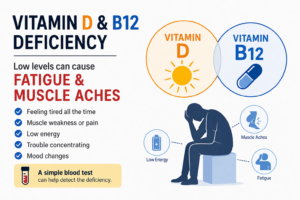
8. Vitamin B12 and Vitamin D Tests
Vitamin deficiencies can contribute to health problems, but testing is most useful when there is a reason to suspect a deficiency.
Vitamin B12
A vitamin B12 test may be appropriate if you have symptoms such as unexplained anemia, numbness, tingling, or certain neurological symptoms. It may also be considered if you follow a strict vegan diet, have a condition affecting nutrient absorption, or take certain medications long term.
Vitamin D
Vitamin D testing may be considered when there are specific risk factors or clinical concerns, such as certain bone disorders, low calcium levels, or conditions affecting vitamin absorption.
Routine vitamin D screening is not recommended for every healthy adult without specific indications.
Your doctor can help determine whether either test is necessary rather than relying on symptoms alone or taking supplements without assessment.
9. Eye Examination
Regular eye examinations can help assess vision and identify certain eye conditions.
Depending on your age, symptoms, family history, and medical conditions, an eye care professional may recommend:
- Visual acuity testing.
- Refraction assessment.
- Eye pressure measurement.
- Examination of the retina and optic nerve.
People with diabetes, high blood pressure, a family history of glaucoma, or existing eye problems may require more frequent examinations.
Even if your vision seems normal, the appropriate timing of an eye examination depends on your individual risk.
10. Cancer Screening Based on Age and Risk
Cancer screening is intended to identify certain cancers or precancerous changes before symptoms develop. However, screening recommendations differ by cancer type, age, family history, and individual risk.
Cervical Cancer Screening
People with a cervix should follow recommended cervical cancer screening guidance. Depending on the guideline and test used, screening may involve HPV testing, a Pap test, or an appropriate combination.
Screening schedules differ between countries, so follow local guidance and your healthcare professional’s advice.
Breast Cancer Screening
Breast cancer screening recommendations depend on age, personal history, family history, and individual risk. Mammography is commonly used for screening in eligible age groups.
People with a strong family history or certain inherited risk factors may need a different screening plan.
Colorectal Cancer Screening
For people at average risk, colorectal cancer screening commonly begins at age 45 under several major international guidelines. Earlier screening may be appropriate for people with a strong family history, inherited risk, inflammatory bowel disease, or other specific concerns.
Age 30 alone does not mean that every adult needs a colonoscopy.
Other Cancer Screening
Additional investigations should be based on specific risk factors and clinical recommendations. Whole-body scans or broad tumour-marker panels are not generally recommended as routine cancer screening for healthy adults without a specific indication.
11. ECG and Other Heart Tests: Are They Necessary?
An electrocardiogram (ECG) records the electrical activity of the heart. It may be recommended if you have symptoms such as palpitations, fainting, chest discomfort, or certain abnormal findings during a medical examination.
An echocardiogram (ECHO) uses ultrasound to examine the heart’s structure and pumping function. It may be useful when a doctor suspects a structural heart problem or needs to evaluate a known condition.
However, routine ECG, ECHO, CT scans, or stress tests are not automatically necessary for every healthy adult after age 30. Their use should depend on symptoms, risk factors, and medical assessment.
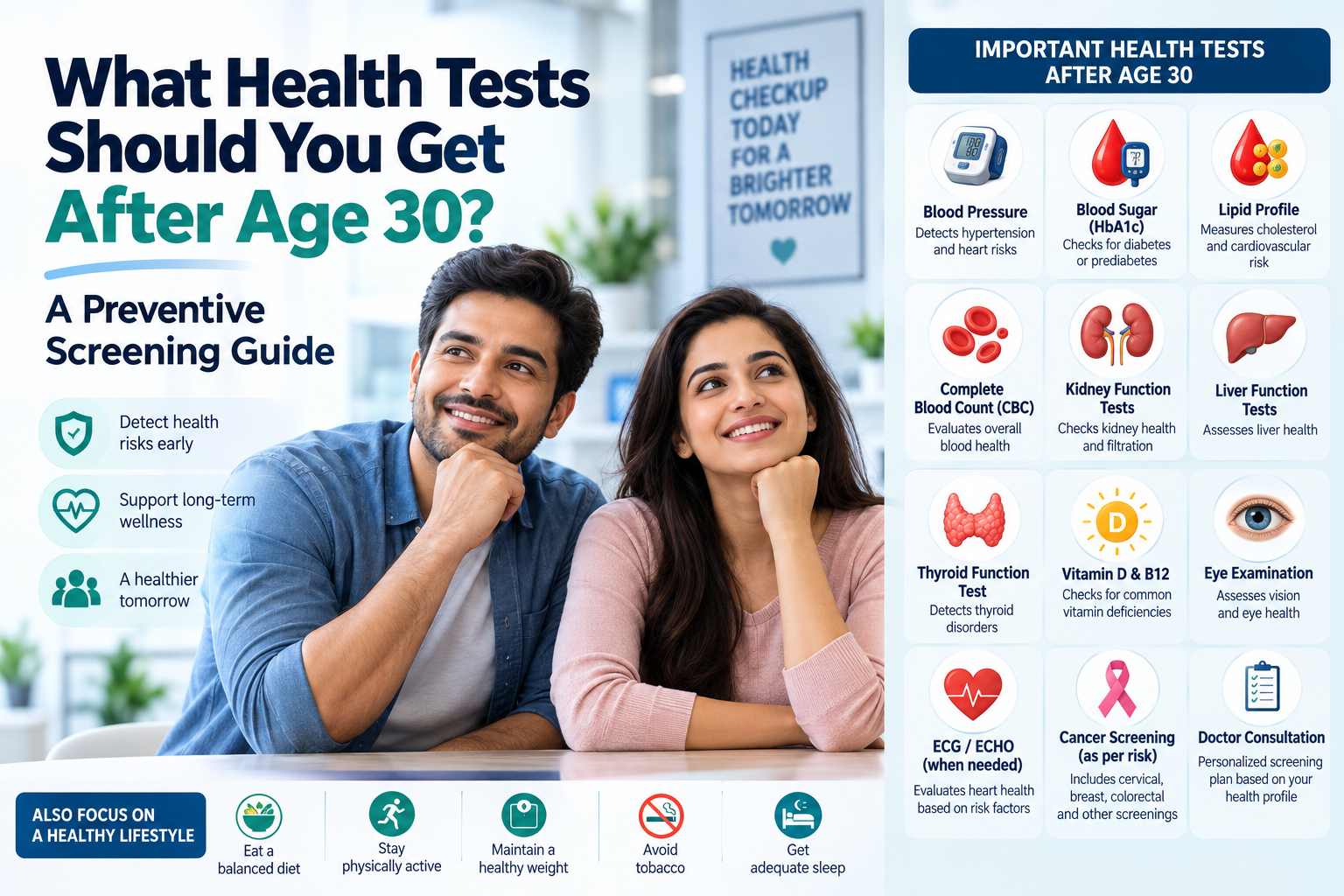
Health Tests After Age 30: Quick Reference
| Test | Main purpose | When it may be useful |
|---|---|---|
| Blood pressure | Detect hypertension | Routine preventive care |
| Blood glucose or HbA1c | Assess diabetes risk | Based on age, risk factors, and guidelines |
| Lipid profile | Assess cholesterol levels | Cardiovascular risk assessment |
| CBC | Evaluate blood cells and possible anemia | Symptoms or specific clinical indications |
| Kidney function tests | Assess kidney health | Diabetes, hypertension, or other risk factors |
| Liver function tests | Investigate possible liver abnormalities | Symptoms or relevant risk factors |
| TSH | Assess thyroid function | Symptoms or suspected thyroid disease |
| Vitamin B12 | Investigate possible deficiency | Symptoms or deficiency risk |
| Vitamin D | Investigate selected deficiency risks | Specific clinical indications |
| Eye examination | Assess vision and eye health | Based on age, risk, and eye history |
| Cancer screening | Detect selected cancers early | Based on age, sex-related anatomy, and risk |
| ECG or ECHO | Evaluate specific heart concerns | When clinically indicated |
This table is a general guide, not a mandatory test package. A healthcare professional can help you decide which investigations are appropriate.
How Often Should You Get a Health Checkup After 30?
There is no single schedule that suits everyone. A preventive checkup may include a review of your medical history, blood pressure, weight, lifestyle, family history, vaccination status, and appropriate screening needs.
Your doctor may recommend more frequent follow-ups if you have abnormal results, a chronic condition, or significant risk factors. If your health indicators remain normal, some tests may not need to be repeated every year.
Avoid repeating blood tests or scans simply because they are included in a standard package. Unnecessary testing can lead to incidental findings, additional costs, and follow-up procedures that may not improve health.
Lifestyle Habits That Support Preventive Health
Diagnostic testing is only one part of maintaining good health. Everyday habits can help lower the risk of several chronic diseases.
- Eat a balanced diet with vegetables, fruits, whole grains, and appropriate protein sources.
- Stay physically active and limit prolonged sitting.
- Maintain a healthy weight where possible.
- Avoid tobacco and exposure to secondhand smoke.
- Limit alcohol consumption.
- Get adequate sleep.
- Monitor blood pressure when advised.
- Attend recommended screenings and follow up on abnormal results.
If you notice persistent symptoms, do not wait for your next routine checkup to seek medical advice.
Frequently Asked Questions
Which blood tests should I get after age 30?
Depending on your medical history and risk factors, your doctor may recommend blood glucose or HbA1c, a lipid profile, kidney function tests, or other investigations. A CBC, liver function test, or thyroid test may be appropriate when clinically indicated.
Is a full body checkup necessary every year after 30?
Not necessarily. The most useful checkup is one tailored to your age, health history, symptoms, and risk factors. Some measurements may be reviewed regularly, while certain blood tests or imaging studies may only be needed when indicated.
Should I get an HbA1c test if I feel healthy?
Feeling healthy does not rule out diabetes or prediabetes. Your doctor can advise whether screening is appropriate based on your age, weight, family history, previous readings, and other risk factors.
Do I need an ECG after turning 30?
An ECG is not automatically required simply because you have turned 30. It may be recommended when symptoms, examination findings, or medical history suggest a reason to evaluate your heart’s electrical activity.
Which health tests are important for women after 30?
Women may need the same general preventive assessments as other adults, including blood pressure and appropriate diabetes and cholesterol screening. Cervical cancer screening is also important for eligible individuals, while breast cancer screening depends on age and personal risk.
Final Thoughts
Your 30s are an excellent time to establish healthy habits and understand your personal health risks. Blood pressure measurement, appropriate diabetes and cholesterol screening, and selected kidney, liver, thyroid, and other tests can help identify health concerns when there is a clear reason to investigate them.
However, preventive healthcare is not about getting every test available; it is about getting the right tests at the right time.
Consult a qualified healthcare professional to create a screening plan suited to your medical history, family history, lifestyle, and individual needs. Early identification of health risks, combined with appropriate treatment and healthy daily habits, can support better long-term health.