
Experiencing sudden joint pain, swelling, redness, or tenderness, particularly in the big toe, ankle, or knee? These symptoms may sometimes indicate gout, a form of inflammatory arthritis associated with the accumulation of uric acid crystals in the joints.
High uric acid levels are often linked to gout, but many people with elevated uric acid never develop symptoms. This makes early assessment and appropriate diagnostic testing important.
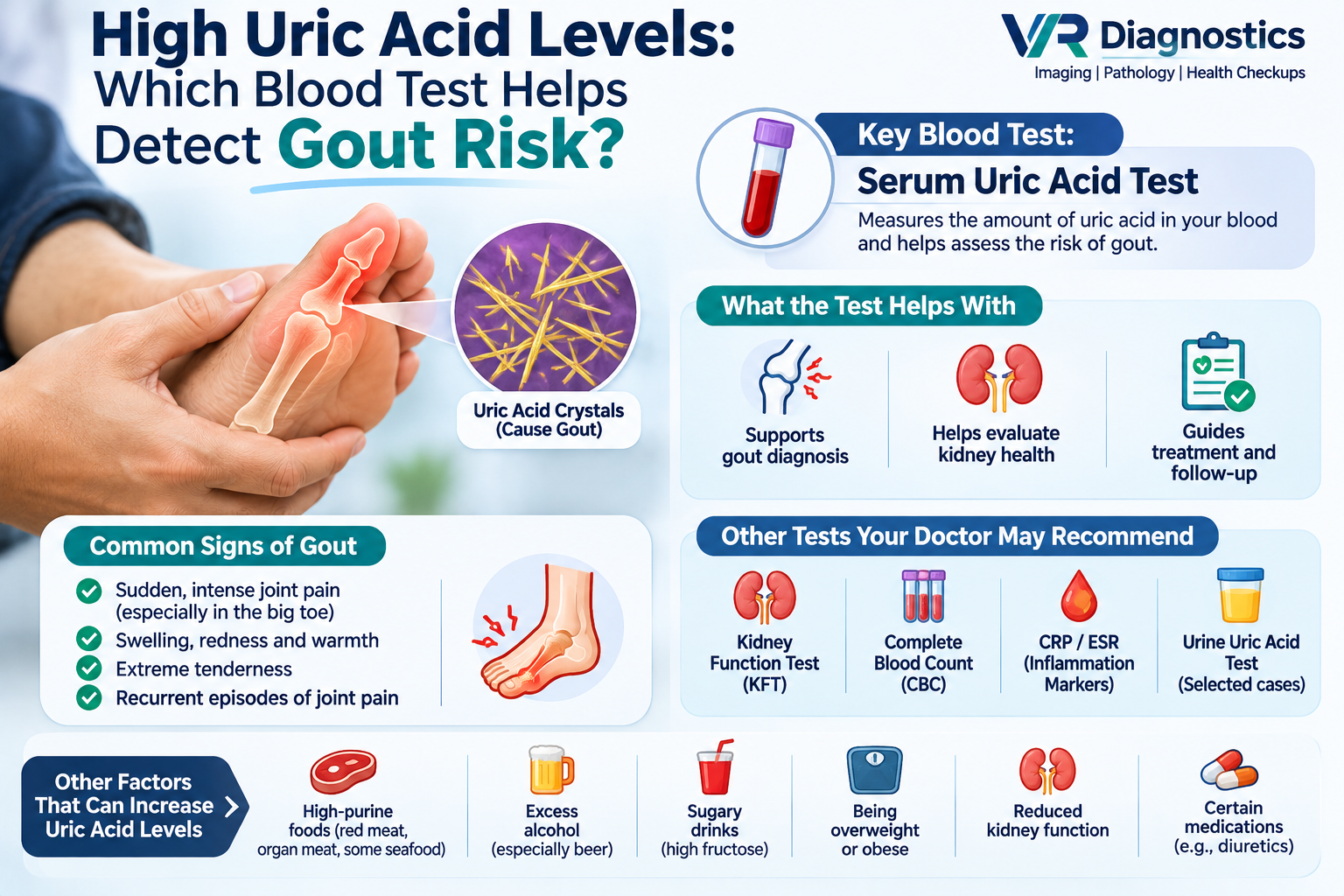
A simple blood investigation called the Serum Uric Acid Test can measure the amount of uric acid in your bloodstream. Doctors may also recommend additional blood and urine tests to evaluate kidney function and investigate possible underlying causes.
In this guide, we explain how uric acid levels are tested, which investigations help assess gout risk, and when you should consider getting tested.
What Is Uric Acid and Why Does It Increase?
Uric acid is a waste product formed when the body breaks down substances called purines. Purines are naturally present in body tissues and are also found in certain foods.
Normally, uric acid dissolves in the blood, passes through the kidneys, and leaves the body through urine.
However, when the body produces too much uric acid or the kidneys do not remove enough of it, uric acid levels can increase. This condition is known as hyperuricemia.
Excess uric acid can sometimes form sharp crystals that accumulate in joints and surrounding tissues, triggering inflammation and painful gout attacks.
Common Reasons for High Uric Acid Levels
- Eating excessive amounts of purine-rich foods.
- Frequent consumption of red meat and organ meat.
- Eating certain seafood, such as sardines and shellfish.
- Drinking excessive alcohol.
- Consuming sugary beverages containing fructose.
- Being overweight or having metabolic conditions.
- Reduced kidney function.
- Family history of high uric acid or gout.
- Taking certain medications, including some diuretics.
High uric acid levels do not always indicate gout, but persistent elevation can increase the likelihood of developing the condition.
Which Blood Test Detects High Uric Acid Levels?
The primary blood investigation used to measure uric acid is called the Serum Uric Acid Test, also known as the Serum Urate Test.
It measures the concentration of uric acid in your blood and helps doctors assess whether elevated uric acid may be contributing to gout symptoms or other health concerns.
What Does a Serum Uric Acid Test Measure?
The test measures the amount of uric acid circulating in your bloodstream.
Doctors may recommend it if you experience:
- Sudden joint pain or swelling.
- Redness and warmth around a joint.
- Repeated episodes of unexplained joint inflammation.
- Pain in the big toe, ankle, or knee.
- Suspected kidney stones.
- A history of gout.
- A need to monitor uric acid-lowering treatment.
The results are interpreted alongside your symptoms, medical history, and physical examination.
What Is the Normal Uric Acid Level?
Uric acid reference ranges can vary between laboratories and may differ according to sex and testing methods.
A commonly used reference range is approximately:
| Category | Approximate Uric Acid Level |
|---|---|
| Adult men | 3.4–7.0 mg/dL |
| Adult women | 2.4–6.0 mg/dL |
These values are illustrative, not universal diagnostic cutoffs. Always refer to the reference range printed on your laboratory report.
In people with suspected gout, a serum urate level of 6 mg/dL or higher supports the clinical assessment. However, an elevated result alone does not confirm gout.
Importantly, uric acid levels can sometimes fall temporarily during an acute gout attack. If gout is strongly suspected despite a lower result, your doctor may recommend repeating the test after the flare has settled. NICE clinical guidance.
Other Tests Doctors May Recommend Along With Uric Acid Testing
A serum uric acid test provides useful information, but additional investigations may be necessary to evaluate kidney health, inflammation, and possible complications.
1. Kidney Function Test (KFT)
The kidneys play a major role in removing uric acid from the body. Reduced kidney function can contribute to elevated uric acid levels.
A Kidney Function Test may include:
- Serum creatinine.
- Estimated glomerular filtration rate (eGFR).
- Blood urea.
- Electrolytes, when appropriate.
These measurements help doctors evaluate how effectively your kidneys are functioning.
2. Complete Blood Count (CBC)
A CBC measures different components of your blood, including red blood cells, white blood cells, hemoglobin, and platelets.
It may be recommended when doctors need to investigate inflammation, infection, or other possible causes of joint symptoms.
A CBC cannot independently confirm gout.
3. C-Reactive Protein (CRP) Test
CRP is a protein produced by the liver in response to inflammation.
During an acute gout attack, CRP levels may increase because of inflammation around the affected joint.
Doctors may recommend this test to assess inflammatory activity and investigate other possible conditions.
However, elevated CRP does not specifically indicate gout.
4. Erythrocyte Sedimentation Rate (ESR)
The ESR test measures how quickly red blood cells settle in a test tube over a specified period.
An increased ESR may indicate inflammation somewhere in the body.
It can provide additional information when investigating joint pain and swelling, but it cannot confirm gout on its own.
5. Urine Uric Acid Test
In certain situations, doctors may recommend a urine uric acid test to evaluate how much uric acid is being eliminated through urine.
It may be useful when investigating:
- Recurrent kidney stones.
- Suspected uric acid kidney stones.
- Abnormal uric acid metabolism.
- Selected cases of elevated blood uric acid.
Depending on the clinical question, the doctor may request a timed urine collection.
How Is Gout Diagnosed?
Although blood testing plays an important role, diagnosing gout requires more than checking uric acid levels.
Doctors generally consider symptoms, physical examination, medical history, and laboratory findings.
Common Signs of Gout
- Sudden, intense joint pain.
- Swelling around the affected joint.
- Redness and warmth.
- Extreme tenderness, sometimes even from light touch.
- Pain that frequently begins at night.
- Repeated episodes affecting the same or different joints.
The big toe is a common location, but gout can also affect the ankles, knees, wrists, fingers, and elbows.
Joint Fluid Analysis
When the diagnosis remains uncertain, doctors may recommend joint aspiration.
During this procedure, a small amount of fluid is collected from the affected joint using a needle.
The fluid is examined under a microscope to identify monosodium urate crystals.
Finding these crystals provides strong confirmation of gout. The procedure can also help investigate joint infections, which may produce similar symptoms.
Ultrasound Examination
Ultrasound can sometimes help identify urate crystal deposits and other changes associated with gout.
It may be recommended when the diagnosis remains uncertain or joint aspiration is not suitable.
The appropriate investigation depends on the patient’s symptoms and clinical findings.
What Happens If High Uric Acid Levels Are Ignored?
As a result, persistently elevated uric acid levels increase gout risk in susceptible individuals.
If gout is left untreated or inadequately controlled, possible complications include:
1. Repeated Gout Attacks
Painful episodes may become more frequent and affect additional joints.
2. Joint Damage
Long-term crystal accumulation and inflammation can damage joint structures and affect movement.
3. Tophi Formation
Tophi are deposits of urate crystals that can develop beneath the skin, particularly around the fingers, toes, elbows, and ears.
4. Kidney Stones
Uric acid can contribute to the formation of certain types of kidney stones.
5. Kidney-Related Complications
Gout and kidney disease can occur together. Reduced kidney function may also make it harder for the body to eliminate uric acid.
Not everyone with elevated uric acid develops these complications. Medical assessment helps determine individual risk.
How to Prepare for a Uric Acid Blood Test
A serum uric acid test generally involves a simple blood sample collected from a vein in your arm.
Before undergoing the test, consider the following:
- Confirm whether fasting is required. A uric acid test alone often does not require fasting, but other tests in your package may.
- Inform the healthcare professional about your current medications.
- Mention any supplements you are taking.
- Follow the laboratory’s instructions regarding food and water.
- Inform your doctor if you are currently experiencing a gout attack.
Certain medications and medical conditions can influence uric acid levels. Never stop prescribed medication before testing without medical advice.
How Can You Manage High Uric Acid Levels?
Managing elevated uric acid involves identifying possible causes, addressing associated health conditions, and following appropriate medical advice.
Some helpful lifestyle measures include:
1. Stay Properly Hydrated
Drinking adequate water supports normal kidney function and urine production. Follow any fluid restrictions prescribed for kidney or heart conditions.
2. Reduce Purine-Rich Foods
Consider limiting foods that can contribute to increased uric acid production, such as:
- Organ meats.
- Excessive red meat.
- Certain seafood, including sardines and shellfish.
- Meat-based gravies and extracts.
3. Limit Alcohol Consumption
Beer and certain other alcoholic beverages can increase the risk of gout attacks.
4. Avoid Excessive Sugary Drinks
Sugar-sweetened beverages containing fructose may contribute to higher uric acid levels.
5. Maintain a Healthy Weight
Gradual, sustainable weight management can help improve metabolic health and reduce gout risk.
Avoid crash diets or prolonged fasting, which may trigger gout attacks in some people.
6. Follow Your Doctor’s Treatment Plan
Depending on your condition, your doctor may recommend medication to manage acute gout attacks or lower uric acid levels over the long term.
Dietary changes alone may not be sufficient for people with recurrent gout or certain complications.
When Should You Get a Uric Acid Test?
Consider consulting a healthcare professional if you experience:
- Repeated episodes of sudden joint pain.
- Swelling and redness around the big toe.
- Unexplained ankle or knee inflammation.
- A history of kidney stones.
- Previously elevated uric acid levels.
- A family history of gout.
- Existing kidney disease with concerns about uric acid levels.
Important: A sudden, hot, swollen, and painful joint needs prompt medical evaluation, especially if accompanied by fever or feeling unwell. A joint infection can resemble gout and requires urgent treatment.
Frequently Asked Questions
Can a blood test confirm gout?
A serum uric acid test can support the diagnosis, but it cannot confirm gout by itself. Doctors may recommend joint fluid analysis to identify urate crystals when the diagnosis is uncertain.
Can uric acid levels be normal during a gout attack?
Yes. Uric acid levels can temporarily fall during an acute gout attack. If gout is strongly suspected, your doctor may recommend repeating the test after the attack has settled.
Does high uric acid always cause joint pain?
No. Many people have elevated uric acid without experiencing gout symptoms. This condition is known as asymptomatic hyperuricemia.
Is fasting necessary before a uric acid test?
Usually, fasting is not required for an isolated serum uric acid test. However, if other blood investigations are being performed simultaneously, fasting may be necessary.
Can high uric acid affect kidney health?
High uric acid can contribute to certain kidney-related problems, including uric acid kidney stones. Kidney function tests can help doctors assess kidney health.
How often should uric acid levels be checked?
Testing frequency depends on your medical condition and treatment plan. People receiving uric acid-lowering treatment may require periodic monitoring, while others may not need repeated testing.
Final Thoughts
High uric acid levels can increase the risk of gout and certain kidney-related complications, but an elevated blood test result does not automatically mean you have gout.
The Serum Uric Acid Test is a useful starting point for assessing uric acid levels. Additional investigations, such as kidney function tests, CRP, ESR, and joint fluid analysis, may be recommended depending on your symptoms and medical history.
If you experience repeated joint pain, swelling, or redness, consult a healthcare professional rather than relying on a blood test alone.
At VR Diagnostics, patients can enquire about serum uric acid testing and other relevant laboratory investigations to help support their healthcare provider’s assessment.
Early evaluation and appropriate follow-up can help identify potential health concerns and support better long-term joint and kidney health.