
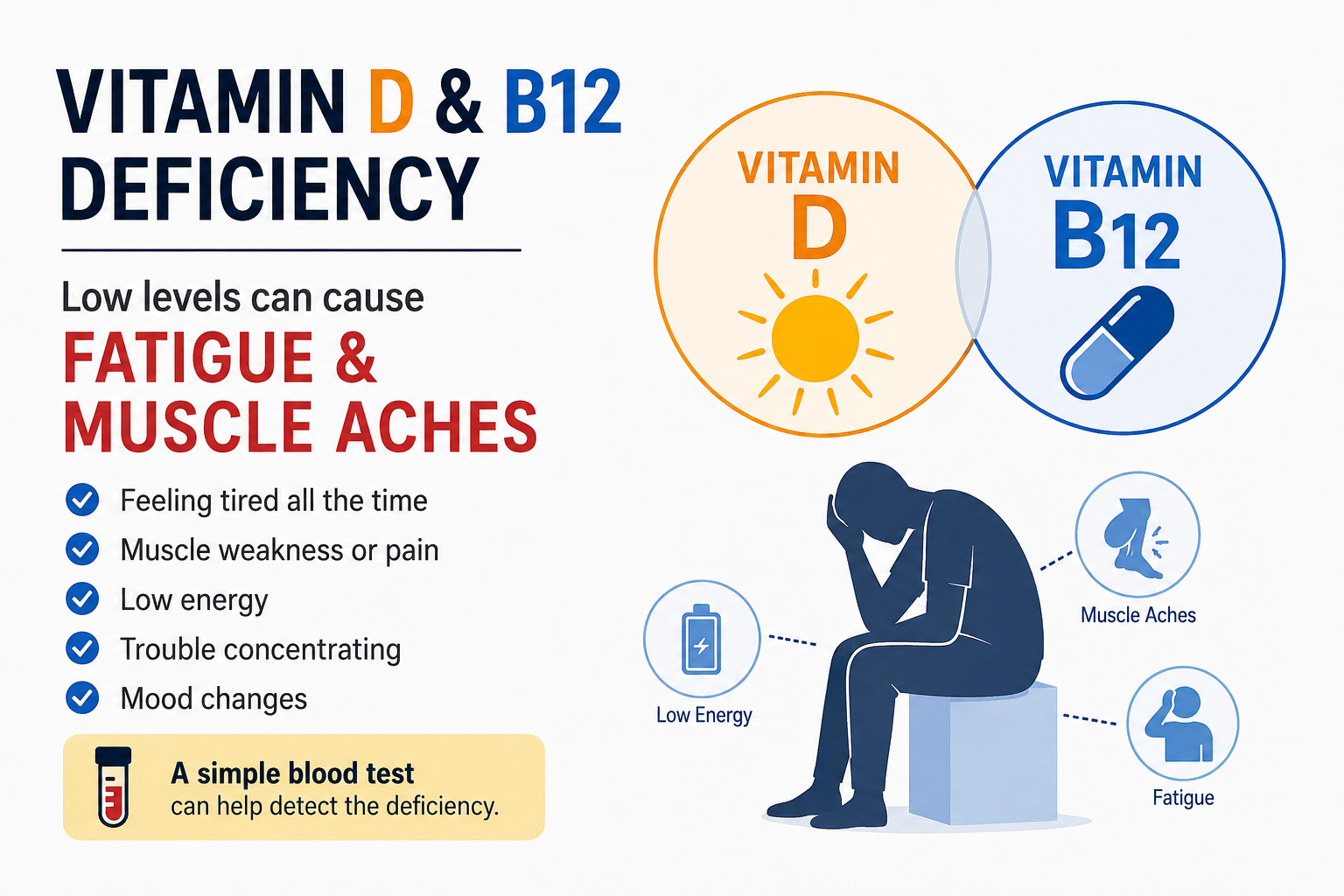
Feeling tired all the time, struggling with muscle aches, or noticing that even a full night’s sleep doesn’t leave you refreshed? While stress, poor sleep, and busy schedules are common culprits, another often-overlooked reason could be low levels of Vitamin D or Vitamin B12.
Deficiencies in these essential vitamins are surprisingly common and can cause symptoms that many people dismiss as “normal aging” or everyday exhaustion. Understanding the signs—and knowing when to get tested—can help you address the real cause of your symptoms.
Why Vitamin D and B12 Matter
Both vitamins play vital roles in keeping your body functioning properly, but they work in different ways.
Vitamin D supports bone health, muscle function, immune health, and helps regulate calcium absorption. Your body produces it when your skin is exposed to sunlight, and it is also found in certain foods and supplements.
Vitamin B12 is essential for healthy nerves, red blood cell production, and DNA synthesis. Since it is primarily found in animal-based foods, vegetarians, vegans, and older adults are at a higher risk of deficiency.
Common Symptoms of Vitamin D Deficiency
Vitamin D deficiency often develops gradually, making it difficult to recognize. Symptoms may include:
- Persistent fatigue or low energy
- Muscle weakness
- Frequent muscle or joint pain
- Bone pain or tenderness
- Lower back pain
- Increased susceptibility to infections
- Slow recovery after illness
- Mood changes, including low mood
In severe cases, prolonged deficiency can increase the risk of osteoporosis and fractures.
Common Symptoms of Vitamin B12 Deficiency
Vitamin B12 deficiency affects both the nervous system and blood cells. Common symptoms include:
- Constant tiredness despite adequate sleep
- Weakness and reduced stamina
- Tingling or numbness in the hands and feet
- Difficulty concentrating or memory problems
- Dizziness
- Pale skin
- Shortness of breath during physical activity
- Mood changes or irritability
If left untreated, severe B12 deficiency may lead to permanent nerve damage.
Why These Deficiencies Cause Fatigue
Fatigue is one of the most common symptoms shared by both deficiencies.
With Vitamin D deficiency, muscles don’t function efficiently, leading to weakness and persistent aches that make daily activities feel more exhausting.
With Vitamin B12 deficiency, your body cannot produce enough healthy red blood cells. This reduces oxygen delivery throughout the body, causing weakness, tiredness, and reduced physical performance.
Who Is at Higher Risk?
Several factors increase the likelihood of developing low Vitamin D or B12 levels.
Higher Risk for Vitamin D Deficiency
- Limited sun exposure
- Indoor lifestyle
- Regular sunscreen use without adequate sun exposure
- Older adults
- Darker skin tones
- Obesity
- Certain digestive disorders affecting absorption
Higher Risk for Vitamin B12 Deficiency
- Strict vegetarian or vegan diets
- Adults over 50 years old
- Long-term use of acid-reducing medications
- People with digestive disorders such as Crohn’s disease or celiac disease
- Individuals who have undergone stomach or intestinal surgery
When Should You Consider Testing?
It may be worth discussing blood tests with your healthcare provider if you experience:
- Fatigue lasting several weeks without a clear explanation
- Ongoing muscle pain or weakness
- Frequent tingling or numbness
- Difficulty with balance
- Memory or concentration problems
- Recurrent infections
- Bone pain
- Symptoms despite adequate sleep and a healthy lifestyle
Simple blood tests can accurately measure Vitamin D and Vitamin B12 levels.
Can Diet Help?
Diet plays an important role in maintaining healthy vitamin levels.
Foods Rich in Vitamin D
- Fatty fish like salmon and mackerel
- Egg yolks
- Fortified milk
- Fortified cereals
- Mushrooms exposed to UV light
Sunlight remains one of the primary natural sources of Vitamin D.
Foods Rich in Vitamin B12
- Fish
- Chicken
- Eggs
- Milk and dairy products
- Beef
- Fortified breakfast cereals
People following vegetarian or vegan diets may need fortified foods or supplements under medical guidance.
Should You Take Supplements?
While supplements can effectively correct deficiencies, they should ideally be taken after confirming low levels through blood testing and under the guidance of a healthcare professional.
Taking unnecessarily high doses—particularly of Vitamin D—may lead to unwanted side effects. The correct dosage depends on your blood levels, age, medical conditions, and overall health.
When to See a Doctor
Don’t ignore persistent fatigue or muscle pain that continues for weeks or interferes with daily life. Medical evaluation is especially important if symptoms are accompanied by numbness, balance issues, significant weakness, or unexplained weight loss.
Early diagnosis and appropriate treatment can prevent long-term complications and help restore your energy levels.
Final Thoughts
Unexplained fatigue and muscle aches aren’t always just a result of a busy lifestyle. Low Vitamin D or Vitamin B12 levels are common, treatable conditions that can significantly affect your quality of life.
If you’ve been feeling unusually tired, weak, or achy without an obvious reason, consider discussing your symptoms with your healthcare provider. A simple blood test may provide the answers—and getting the right treatment can help you regain your energy, improve muscle function, and feel like yourself again.