
A CT angiography (CTA) is an advanced imaging test that uses X-rays and an iodine-based contrast material to create detailed images of blood vessels. It can help doctors evaluate narrowed arteries, blockages, aneurysms, blood clots, and other vascular conditions.
Although CT angiography is generally safe, preparation is important—particularly when contrast is involved. One of the key considerations before the scan is kidney function, because the kidneys help remove the contrast material from the body.
Understanding the necessary kidney function checks, hydration recommendations, and other preparation steps can make the procedure safer and less stressful.
What Is CT Angiography?
CT angiography combines computed tomography (CT) imaging with an injected contrast agent. The contrast travels through the bloodstream and makes blood vessels easier to see on the scan.
Depending on the area being examined, CTA may be used to evaluate:
- Coronary arteries
- Carotid arteries
- Blood vessels in the brain
- Pulmonary arteries
- Aorta
- Renal arteries
- Arteries in the legs and other parts of the body
The scan is usually quick, but preparation requirements can vary depending on the type of CTA and the patient’s medical history.
Why Is Kidney Function Checked Before CT Angiography?
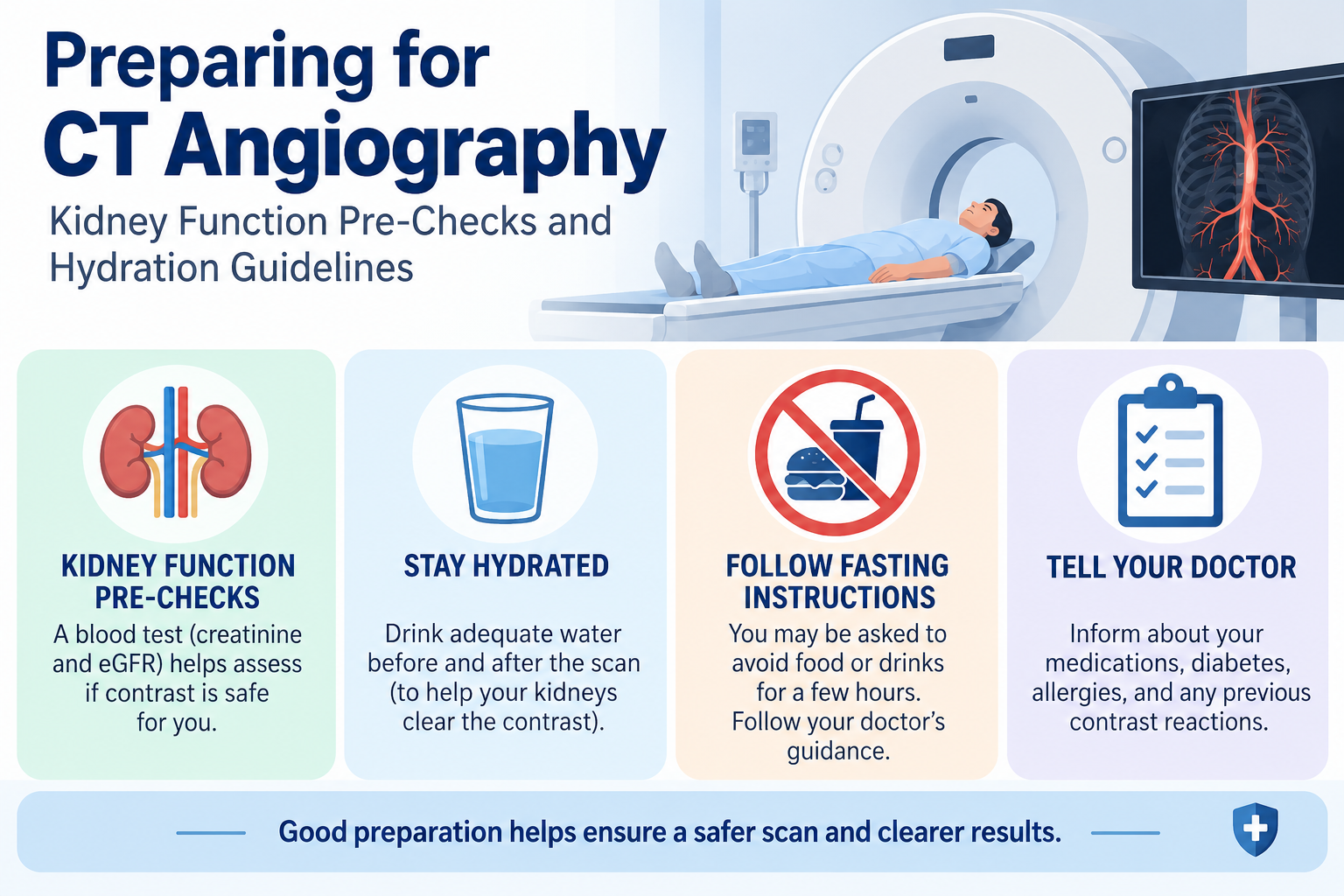
Iodinated contrast is primarily eliminated through the kidneys. For patients with significant kidney impairment, doctors may need to take additional precautions before administering contrast.
A kidney function assessment can help determine whether contrast-enhanced imaging is appropriate and whether additional precautions are needed.
The most commonly reviewed laboratory measurement is serum creatinine, which can be used to estimate the glomerular filtration rate (eGFR).
A healthcare professional may pay particular attention to kidney function if you have:
- Known chronic kidney disease
- Previous abnormal kidney tests
- Diabetes
- Heart failure
- Dehydration
- A history of kidney problems
- Certain medications or medical conditions that may affect kidney function
Not every patient requires the same testing before CTA. Your doctor or imaging center will determine which tests are appropriate based on your health and the planned examination.
What Is eGFR and Why Does It Matter?
eGFR estimates how efficiently your kidneys are filtering blood. It is generally more useful for assessing kidney function than looking at creatinine alone.
The lower the eGFR, the more carefully healthcare professionals may need to consider the risks and benefits of contrast administration.
Importantly, having reduced kidney function does not automatically mean that a contrast-enhanced CT scan cannot be performed. The decision depends on the severity of kidney impairment, the urgency of the examination, other health conditions, and available alternatives.
Your healthcare provider will interpret your results rather than relying on a single number in isolation.
Hydration Before and After CT Angiography
Staying adequately hydrated is an important part of preparation for many patients undergoing contrast-enhanced CT.
Adequate fluid intake supports normal kidney function and helps the body eliminate contrast after the scan.
However, hydration instructions should be individualized. Drinking excessive amounts of fluid is not appropriate for everyone, particularly people who have been advised to restrict fluids because of certain heart or kidney conditions.
Before the Scan
Unless your imaging center has given you different instructions:
- Maintain your usual fluid intake.
- Ask whether you should drink water before the appointment.
- Avoid becoming dehydrated, particularly if you have been fasting.
- Follow any specific fasting instructions provided by the radiology team.
After the Scan
Many patients can return to their normal fluid intake after CTA. Drinking water after the examination may help maintain normal hydration while the kidneys clear the contrast.
If you have heart failure, advanced kidney disease, or a prescribed fluid restriction, do not deliberately increase your fluid intake without speaking with your healthcare provider.
Should You Fast Before CT Angiography?
Fasting requirements depend on the type of CT angiography and the facility’s protocol.
Some CTA examinations may require fasting for several hours, while others may not. If sedation or another procedure is planned alongside imaging, additional fasting instructions may apply.
Always follow the instructions provided by your radiology or healthcare team rather than assuming that fasting is required.
Tell Your Doctor About Your Medications
Before CTA, provide your healthcare team with a complete list of medications, supplements, and relevant medical conditions.
Certain medications may require special consideration depending on your kidney function, the type of scan, and other clinical circumstances.
Do not stop prescription medications on your own. Your doctor or imaging team will tell you if any medication needs to be adjusted or temporarily withheld.
What About Diabetes?
People with diabetes may require additional preparation depending on their medications, kidney function, and whether fasting is necessary.
If you take diabetes medication or insulin, ask your healthcare provider for specific instructions before the scan. This is especially important if you will be fasting.
Tell the Imaging Team About Previous Contrast Reactions
A previous reaction to iodinated contrast should always be reported before CTA.
Not every reaction means that contrast cannot be used again. Depending on what happened previously, the healthcare team may recommend a different preparation strategy, alternative imaging, or other precautions.
Also tell your healthcare team about:
- Previous contrast reactions
- Asthma or significant allergies
- Kidney disease
- Diabetes
- Heart conditions
- Pregnancy or possible pregnancy
- Current medications
- Previous imaging complications
Providing this information allows the medical team to assess your individual risk.
What Happens During the Scan?
During CT angiography, you will usually lie on a CT scanner table.
An intravenous line is placed, generally in your arm or hand, through which the contrast is injected. You may briefly notice:
- A warm sensation
- A metallic taste
- A feeling of flushing
- A temporary sensation similar to urination
These sensations generally pass quickly.
You may be asked to remain still and, depending on the examination, briefly hold your breath. The actual image acquisition is typically very fast.
When Should You Seek Medical Attention After CTA?
Most people tolerate iodinated contrast without significant problems. However, contact your healthcare provider if you develop concerning symptoms after the examination.
Seek urgent medical attention for symptoms such as:
- Difficulty breathing
- Swelling of the face, lips, or throat
- Severe dizziness or fainting
- A rapidly developing widespread rash
- Severe or unusual symptoms after the procedure
Mild symptoms should also be reported if they persist or worsen.
A Simple Pre-Scan Checklist
Before your CT angiography appointment, consider the following:
✔ Ask whether kidney function testing is required
✔ Know your recent creatinine/eGFR results if available
✔ Follow the center’s hydration instructions
✔ Follow fasting instructions exactly
✔ Provide a complete medication list
✔ Mention diabetes or other chronic conditions
✔ Tell the team about previous contrast reactions
✔ Inform the healthcare team if you are pregnant or could be pregnant
✔ Follow post-scan instructions regarding fluids and medications
Final Thoughts
CT angiography provides valuable information about blood vessels and can play an important role in diagnosing potentially serious cardiovascular and vascular conditions. Proper preparation helps your healthcare team perform the examination safely and obtain high-quality images.
For many patients, kidney function assessment and appropriate hydration are important parts of contrast-enhanced CT preparation. However, preparation is not one-size-fits-all. Your medical history, kidney function, medications, and the specific CTA being performed can all influence the instructions you receive.
If you are scheduled for CT angiography, follow the instructions provided by your doctor and imaging center, and ask questions if anything is unclear. Good preparation can help ensure a smoother and safer imaging experience.