
A Complete Blood Count (CBC) is one of the most commonly performed blood tests. It provides important information about the cells circulating in your blood and can help doctors identify signs of conditions such as anemia, infection, inflammation, bleeding disorders, and some blood-related diseases.
A CBC is often included in routine health checkups, but doctors may also recommend it when you have symptoms such as persistent fatigue, weakness, fever, unexplained bruising, or unusual bleeding.
What Does a CBC Test Measure?
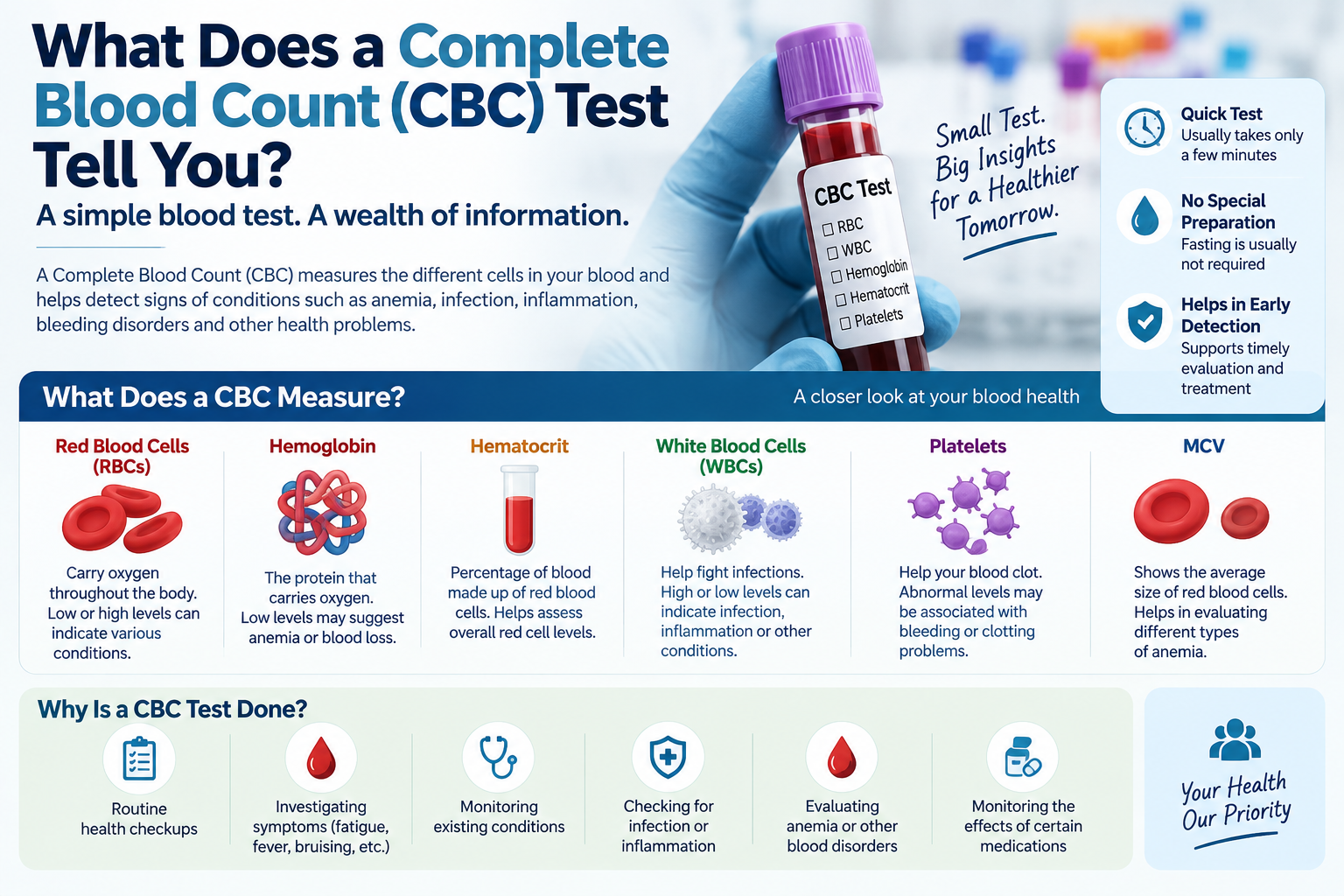
A CBC measures several components of your blood.
1. Red Blood Cells (RBCs)
Red blood cells carry oxygen from the lungs to tissues throughout the body.
The RBC count helps doctors evaluate whether you have an unusually low or high number of red blood cells.
Low levels may occur with certain types of anemia, blood loss, or nutritional deficiencies, while elevated levels can have several possible causes.
2. Hemoglobin
Hemoglobin is the oxygen-carrying protein inside red blood cells.
A low hemoglobin level can be associated with anemia, iron deficiency, blood loss, and other medical conditions. However, a CBC result alone cannot determine the exact cause.
3. Hematocrit
Hematocrit indicates the percentage of your blood volume made up of red blood cells.
Doctors may consider hematocrit together with hemoglobin and RBC count when evaluating conditions affecting red blood cells.
4. White Blood Cells (WBCs)
White blood cells are an important part of the immune system and help the body fight infections and other diseases.
A high WBC count can occur with infections, inflammation, certain medications, and other conditions. A low count can have different causes, including some immune, bone marrow, and medication-related conditions.
A CBC with differential provides additional information by measuring different types of white blood cells, including neutrophils, lymphocytes, monocytes, eosinophils, and basophils.
5. Platelets
Platelets help your blood clot and play an important role in controlling bleeding.
An unusually low or high platelet count may require further evaluation depending on the person’s symptoms and overall health.
6. MCV
Mean Corpuscular Volume (MCV) measures the average size of your red blood cells.
It can provide additional information when doctors are evaluating different types of anemia and other blood-related conditions.
Why Is a CBC Test Done?
A doctor may recommend a CBC for several reasons.
Routine Health Checkups
CBC testing may be included in a general health examination to provide an overview of blood-cell levels.
Investigating Symptoms
A CBC may be useful when investigating symptoms such as:
- Persistent tiredness
- Weakness
- Fever
- Unexplained bruising
- Unusual bleeding
- Pale skin
- Recurrent infections
It can provide clues about possible underlying problems, although additional tests are often needed to establish a diagnosis.
Monitoring Existing Conditions
CBC testing can also be used to monitor conditions that affect blood cells or to track the effects of certain treatments and medications.
What Can an Abnormal CBC Result Mean?
An abnormal CBC result does not automatically mean that you have a disease.
For example:
| CBC Component | Possible significance of an abnormal result |
|---|---|
| RBC count | May provide clues about anemia or other red-cell conditions |
| Hemoglobin | Can help identify anemia and other conditions affecting oxygen-carrying capacity |
| Hematocrit | Helps assess the proportion of blood made up of red cells |
| WBC count | May provide clues about infection, inflammation, immune or other conditions |
| Platelets | Can provide information about bleeding or clotting-related problems |
| MCV | Helps characterize red blood cell size |
Many factors can influence CBC results, including hydration, medications, activity, and other health conditions. Results should therefore be interpreted in context rather than in isolation.
Does a CBC Diagnose a Disease?
Not by itself.
A CBC is an important diagnostic and screening tool, but it generally does not identify the exact cause of an abnormal result. Doctors consider your symptoms, medical history, physical examination, other laboratory tests, and sometimes imaging studies before reaching a diagnosis.
For example, a low hemoglobin level may indicate anemia, but additional testing may be necessary to determine whether the underlying cause involves iron deficiency, blood loss, vitamin deficiency, or another condition.
How Is a CBC Test Performed?
A healthcare professional usually collects a small blood sample from a vein in your arm.
The procedure generally takes only a few minutes. You may feel a brief pinch when the needle is inserted, and some people experience minor bruising afterward.
Do You Need to Fast Before a CBC?
Usually, no.
A CBC generally does not require special preparation. However, if your doctor has ordered additional blood tests along with the CBC, you may need to fast depending on those tests. Follow the instructions provided by your healthcare professional or diagnostic laboratory.
When Should You Consider Getting a CBC?
Your doctor may recommend a CBC if you have:
- Unexplained fatigue or weakness
- Persistent fever
- Frequent infections
- Unusual bruising
- Unexpected bleeding
- Symptoms suggestive of anemia
- A condition requiring regular blood-count monitoring
- A treatment that can affect blood-cell levels
A CBC may also be included as part of a routine health assessment.
Final Thoughts
A Complete Blood Count (CBC) provides a useful snapshot of your blood health by measuring red blood cells, white blood cells, platelets, hemoglobin, hematocrit, and other red-cell indices.
Because many different conditions can cause similar changes in blood counts, an abnormal result should not be interpreted on its own. Your doctor can determine whether further testing is necessary based on your symptoms, medical history, and the complete picture of your health.
Regular testing when medically recommended can help identify changes early and support timely evaluation and treatment.